Honoring the Legacy of the Lenni-Lenape
by Claire Brennan, FOW Communications Coordinator
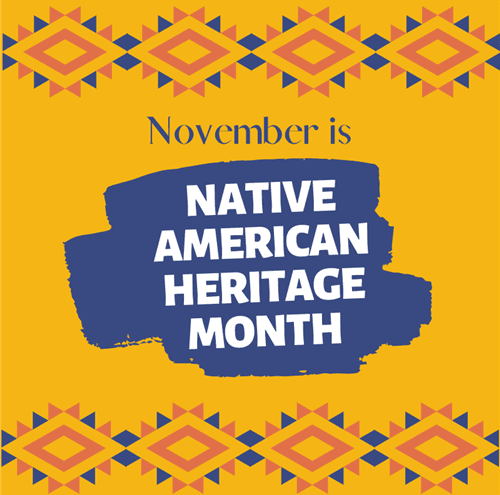
November is Native American Heritage Month, a time to honor the cultures, languages, and living history of Indigenous Peoples.
Here at Friends of the Wissahickon (FOW), we commemorate the original stewards of the land we now call Wissahickon Valley Park: the Lenni-Lenape People. Did you know, the word Wissahickon is believed to be derived from the Lenape’s term,
Wisameckhan, meaning “catfish stream”?
The Lenape were not exclusive to Philadelphia, of course, or even Pennsylvania. Their ancestral homelands, Lenapehoking, also encompass present-day New Jersey, New York, and Delaware. Their cultures and traditions are carried on today by their ancestors all across the United States and Canada.
Philadelphia, now a sprawling metropolis, was once a vast green land with rolling hills and meadows, dotted with wetlands and dense forests. Though the landscape has been transformed, the Lenape’s prominence in the area and centuries of stewardship shouldn’t, and won’t, be forgotten.

Before European settlement in the 17th and 18th centuries, the Lenape lived along creeks and rivers, in temporary settlements. Though it’s hard to imagine neighborhoods like West Philadelphia, Fairmont, and Manayunk as undeveloped stretches of land, we know that the Lenape were here, along the Schuylkill River and its many tributaries like the Wissahickon Creek.
They were skilled farmers who cultivated corn, several varieties of beans, squash, pumpkins, tobacco, and sunflowers. Once the soil lost productivity, the Lenape would relocate, every two decades or so, for greener pastures, according to the University of Pennsylvania’s West Philadelphia Collaborative History.
Refraining from overworking the earth’s soil is only one piece of the Lenape’s sustainable agricultural and land management techniques.
Companion planting, or intercropping, was common practice. This practice is defined by planting with more than one crop to gain mutually positive benefits from each in the system. In the case of the Lenape and many indigenous groups, including the Iroquois and the Cherokee, crops of corn, beans, and squash, lovingly called the Three Sisters, were planted together (with some additions such as tobacco or sunflowers) according to the U.S. Department of Agriculture (USDA) and Holmes, Darnell, 2022.
Not only do these crops sustain those who planted them, but they sustain each other.
“The corn provides a trellis of sorts for the beans to crawl up. The beans provide fixed nitrogen to help the corn and squash grow healthier and increase yield. The squash provides shade to the soil increasing moisture retention and limit weed proliferation. Each crop providing their benefits induces the others to grow better as well as provide natural biodiversity which can limit disease and crop loss,” (Holmes, Darnell 2022).
Sometimes wildflowers were planted around gardens to nourish pollinators and other insects, crops were planted in a mound system allowing soil moisture retention and natural temperature control, and crops were rotated seasonally, according to Holmes.
The Lenape’s relationship with the land that nourishes them is intentional and displays a deep respect for the places they call home. It must be emphasized that Indigenous peoples of the Americas are not a homogeneous group. There are hundreds of distinct tribes, each with their own language, customs, and culture. But we can characterize many by their unique, and deeply spiritual, connection to the land, which in part powered their willingness to work with the natural rhythm of the earth, not against it.
We can all take a page out of the Lenape’s book, but FOW’s stewardship reflects many of the priorities that they practiced centuries ago, here on this very land. FOW builds sustainable trails along the contours of the landscape in order to shed stormwater off the trail surface and into the soil more naturally. We consider the optimal times of the year for large-scale plantings, returning annually to protect and nourish them. And we limit competition by removing invasive plants and vines at almost every FOW service day.
If you’d like to celebrate and learn more about the Original People this Native American Heritage Month, click here.
Sources
Holmes, Darnell. 2022. Lenni Lenape and Modern Practices: Forming a Collective Model to Future Agriculture. Master’s thesis, Harvard University Division of Continuing Education. https://dash.harvard.edu/server/api/core/bitstreams/5ea2e118-df08-45fd-8320-aa389b1c229f/content
Licht, Walter; Lloyd, Mark Frazier; Duffin, J. M.; and Mary D. McConaghy. “The Original People and Their Land: The Lenape, Pre-History to the 18th Century.” West Philadelphia Collaborative History, University of Pennsylvania Graduate School of Education. https://collaborativehistory.gse.upenn.edu/stories/original-people-and-their-land-lenape-pre-history-18th-century.
Marsh, Emily, Ph.D., MLS. “The Three Sisters of Indigenous American Agriculture.” National Agricultural Library, U.S. Department of Agriculture. https://www.nal.usda.gov/collections/stories/three-sisters