Tell Your Dog FOW Says Happy National Dog Day!
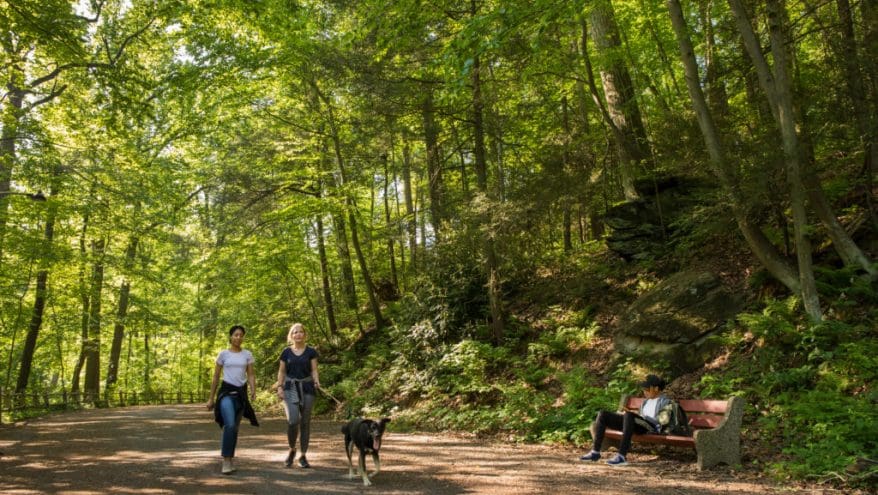
Tell your dog Friends of the Wissahickon says, “Happy (belated) National Dog Day,” and give them a pet from us too! Read these tips so every visit to the Wiss with your favorite, four-legged hiking buddy is a happy and healthy one.

Photo courtesy of Rachel Bambick
Keep your dog leashed. It’s the easiest way to keep them safe. Wissahickon Valley Park has more than 2 million annual visits- and that’s not including the many unfamiliar, furry companions that your dog may encounter on the trails. You can’t control how other dogs react. You can keep them on a leash to remove them from unsafe situations with ease.
Know the signs of heat exhaustion. As we enjoy the rest of the summer heat, brush up on your understanding of the signs of heat exhaustion in dogs:
- Continuous and excessive panting
- Dark red or pale gums
- Increased salivation or thick, sticky saliva
- Vomiting or diarrhea
- Dizziness, weakness, collapse, or inability to walk
- Increased heart rate
- Muscle tremors
Practice trail etiquette, aka wheels yield to heels. Cyclists yield to horses and hikers. Hikers yield to horses. And horses have the right of way. Even well-trained dogs can stir horses, react to fast-moving cyclists, and cause accidents on the trails when they are not on leash.
Always check for ticks, especially in the summer. Make sure to give yourself and your pup a thorough tick check each time you visit the park or any place with tall grass. To reduce the risk of ticks and tick-borne illnesses:
- Wear bug spray and long layers tucked into your socks to prevent initial contact. Light colors make it easier to spot ticks on the surface of your clothes.
- Once you arrive home, run your clothes in the dryer on high heat to kill any ticks that may have hitched a ride with you.
- Shower immediately.
- Check methodically from head to toe for ticks. Run your fingers through your hair, scalp, and behind your ears. Don’t forget to check behind your knees, between your toes, under your armpits, and around your collar, belly button, and groin area.
- Dogs are very susceptible to tick bites and tick-borne diseases. Utilize tick collars, sprays, shampoos, and medication in addition to regularly checking your pet.
Protect our favorite place to play. Dogs are the best- but their unbagged waste might be the worst. Make sure to pick up after your dog and properly dispose of your doggie bags. Even the most responsible dog owners might miss the mark when their dogs are off-leash. Free-roaming dogs often relieve themselves off-trail, and that waste must go somewhere, oftentimes, right down the gorge into our drinking water supply.
We love dogs… but not everyone does. Some people are afraid of dogs- especially big dogs. Excited pups can easily knock over young children and people with limited mobility. Many trails become narrow and difficult to navigate- even more so with free-roaming dogs. Be a courteous park visitor and help us keep a welcoming environment by keeping your pup on a leash.
See you out on the trails!